

The difference between a profitable livestock operation and one bleeding money through health costs usually comes down to systems, not luck. Operations that treat herd health as isolated veterinary events instead of an integrated system hit the same walls every time.
What starts as manageable morning health checks with 30 head becomes chaos at 300. That casual "John handles the sick pen" approach works fine until John's on vacation and nobody knows which animals received what treatment. By the time most operations realize they need actual systems, they're dealing with medication overlaps, missed prevention windows, and compliance nightmares costing thousands in lost productivity.
The Hidden Complexity of Scaling Health Management
Small operations run on borrowed time with informal health tracking. Managing 40-60 head, you remember the limping heifer in pen 3 got antibiotics Tuesday. Your brain becomes the database. It works, until it doesn't.
Integrated herd health management isn't about remembering individual animals—it's creating workflows that capture, track, and trigger actions across your entire operation. The breakdown starts gradually. You miss booster vaccines on replacement heifers. Someone treats an animal still in withdrawal. Sick animals go undiscovered for days because nobody's walking back pastures systematically.
Individual mistakes compound invisibly. Respiratory issues spread through pens. Mineral deficiencies cause breeding failures. The operation keeps running, but efficiency erodes.
Most ranchers hit their breaking point between 150-250 head. Mental tracking fails, but they haven't invested in proper documentation. They're stuck in the "operational valley"—too big for informal management, too small for dedicated health staff.
Why Traditional Approaches Create Dangerous Gaps
The evolution looks predictable. Buy a treatment log book. Create a spreadsheet. Maybe invest in herd management software. These tools become expensive data graveyards because they don't address the core issue: disconnected workflows.
Simplify farm operations and enhance animal care.
Barnyly helps you organize, track, and manage every aspect of your farm operations seamlessly.
- Comprehensive livestock tracking
- Automated health alerts
- Feed and resource scheduling
No credit card required
Take a standard scenario—180-head cow-calf operation with pinkeye outbreak. Without integrated systems:
First cases get noticed randomly. Different people spot animals on different days. Someone treats cases but doesn't record which animals or dosages. Another person retreats the same animals. Nobody tracks environmental factors—dusty conditions, face flies, nutritional stress.
By the time they realize it's an outbreak, they've lost weeks of productivity. Treatment costs hit $2,000-3,000, but the real damage comes from reduced weaning weights and delayed breeding.
An operation with proper systems catches cases within 24 hours. Clear treatment records prevent double-dosing. Environmental monitoring triggers preventive measures. The same outbreak affects 5-8 animals instead of 30-40.
Observation gaps: Without structured rounds, sick animals hide until symptoms become severe. Early intervention windows close.
Communication gaps: Information lives in different heads or scattered notebooks. The feeder notices reduced intake, but that never reaches whoever handles health decisions.
Treatment gaps: Inconsistent protocols lead to under-treatment, over-treatment, or missed animals. Withdrawal periods get miscalculated.
Prevention gaps: Vaccination schedules drift. Parasite management becomes reactive. Nutritional supplementation happens sporadically.
Record gaps: Incomplete records make it impossible to identify patterns, prove compliance, or make data-driven decisions.
Building Role Structures That Actually Work
The biggest mistake is making one person the "animal health person" and expecting that to solve everything. Real integrated herd health management requires overlapping responsibilities with clear handoffs, not single points of failure.
For smaller operations (under 100 head), you need at minimum:
-
Primary health observer Walks all animals daily, documents observations
-
Treatment decision maker Reviews observations, initiates treatments
-
Record keeper Maintains health documentation and schedules
-
Backup for each role Cross-trained on protocols and systems
These might be the same 2-3 people wearing different hats, but defining roles separately ensures nothing falls through cracks.
Scaling toward 200-300 head needs more sophistication:
-
Zone observers Responsible for specific groups/pastures
-
Health coordinator Consolidates observations, manages treatment protocols
-
Compliance tracker Monitors withdrawal periods, vaccination schedules
-
Supply manager Maintains medication inventory
-
Data analyst Reviews patterns, adjusts protocols
The key isn't hiring more people—it's structuring workflows so existing team members handle expanded responsibilities without drowning.
Each morning, zone observers spend 15-20 minutes walking assigned areas with simple checklists. They're not diagnosing—just noting observable symptoms: discharge, lameness, isolation behavior, reduced feed intake. These observations feed into a central log.
The health coordinator reviews observations by 10 AM and makes treatment decisions based on established protocols. They don't examine every flagged animal—many issues resolve without intervention. But systematic observation means nothing progresses to serious illness unnoticed.
Alert Systems and Escalation Protocols
Good alert systems prevent small issues from becoming emergencies. Most operations either have no alerts or too many. The sweet spot requires calibration based on specific risks and capacity.
Start with three alert levels:
Level 1 - Monitoring Required
-
Single animal with mild symptoms
-
Minor behavioral deviations
-
Response
Document and reassess in 24 hours
-
Example
One calf with mild nasal discharge, eating normally
Level 2 - Intervention Likely
-
Multiple animals showing symptoms
-
Single animal with moderate symptoms
-
Clear treatment protocol exists
-
Response
Implement standard treatment, increase observation frequency
-
Example
Three calves with runny eyes, early pinkeye suspected
Level 3 - Immediate Action Required
-
Severe symptoms in any animal
-
Rapid symptom spread
-
Symptoms outside standard protocols
-
Response
Immediate treatment, consider veterinary consultation
-
Example
Animal down, severe respiratory distress, 10+ animals symptomatic
Define specific triggers for each level. "Calf looks sick" isn't actionable. "Calf showing nasal discharge + elevated respiratory rate + separated from group" triggers Level 2.
Your escalation protocol should specify who makes decisions at each level. Level 1 might be handled by whoever observes it. Level 2 requires health coordinator approval. Level 3 triggers immediate management notification and potential veterinary consultation.
Build alerts into daily workflows, not as add-ons. If morning feeding is 7 AM, health observations happen during feeding. If you move cattle weekly, health assessments happen during movement.
Prevention Schedules That Scale With Your Operation
Prevention schedules break down because they're built around calendar dates instead of operational triggers. "Vaccinate in spring" works until spring gets busy and vaccines get pushed to summer.
Better prevention schedules tie to operational events that already happen reliably:
-
Breeding soundness exams trigger bull vaccination updates
-
Pregnancy checking triggers cow vaccination boosters
-
Weaning triggers calf vaccination series
-
Pasture rotation triggers parasite monitoring
-
Feed delivery triggers mineral supplementation review
This scales naturally. At 50 head, these events happen informally. At 500 head, they're scheduled operations that automatically include health protocols.
A working prevention schedule for a 200-head operation:
Monthly recurring:
-
Mineral feeder inspection/refill (1st Monday)
-
Medication inventory review (15th)
-
Treatment record audit (last Friday)
Triggered by events:
-
New arrival quarantine protocol (21 days)
-
Pre-breeding vaccination (6 weeks before bull turnout)
-
Pre-calving vaccination (6 weeks before due date)
-
Calf working series (at 2, 4, and 6 months)
Seasonal assessments:
-
Parasite testing at spring grass flush
-
Body condition scoring before winter
-
Hoof health check at fall working
-
Breeding soundness before turnout
These protocols embed into operations you're already doing. You're not adding 20 separate health tasks—you're adding health components to existing workflows.
Incident Response Workflows That Prevent Cascade Failures
When health incidents hit, response workflows determine whether you get contained problems or operational disasters. Most operations react individually to each sick animal without considering system-wide implications. A few cases of scours become whole-barn outbreaks.
Effective incident response requires three parallel workflows:
Immediate containment workflow:
-
Isolate affected animals within 2 hours
-
Establish buffer zones between sick and healthy groups
-
Implement biosecurity protocols for personnel movement
-
Begin treatment per established protocols
Investigation workflow:
-
Document symptoms, timeline, affected animals
-
Review recent management changes (feed, movement, new additions)
-
Collect samples if needed for diagnosis
-
Check for environmental contributors
Prevention escalation workflow:
-
Increase observation frequency in at-risk groups
-
Review and boost prevention protocols if needed
-
Adjust nutrition/mineral programs proactively
-
Communicate with suppliers about potential issues
Have these workflows documented before you need them. During actual incidents, stress and time pressure make optimal responses nearly impossible. Following a checklist? That's manageable in crisis.
Actual workflow template for respiratory disease response:
Hour 1-2: Containment
-
Move symptomatic animals to isolation pen
-
Note all animals in contact group
-
Assign dedicated caretaker if possible
-
Start treatment protocol A (specify medication, dosage, route)
Hour 2-6: Assessment
-
Count total affected animals
-
Review last 14 days of records for this group
-
Check ventilation, crowding, dust levels
-
Pull feed samples if indicated
Day 1-3: Monitoring
-
Observe contact group every 6 hours
-
Document new cases on tracking sheet
-
Adjust treatment based on response
-
Consider veterinary consultation if >10% affected
Day 3-7: Evaluation
-
Assess treatment effectiveness
-
Decide on metaphylactic treatment for contact group
-
Review and adjust housing/management
-
Plan for extended withdrawal periods
Visualizing the incident response workflow helps teams follow steps under pressure.
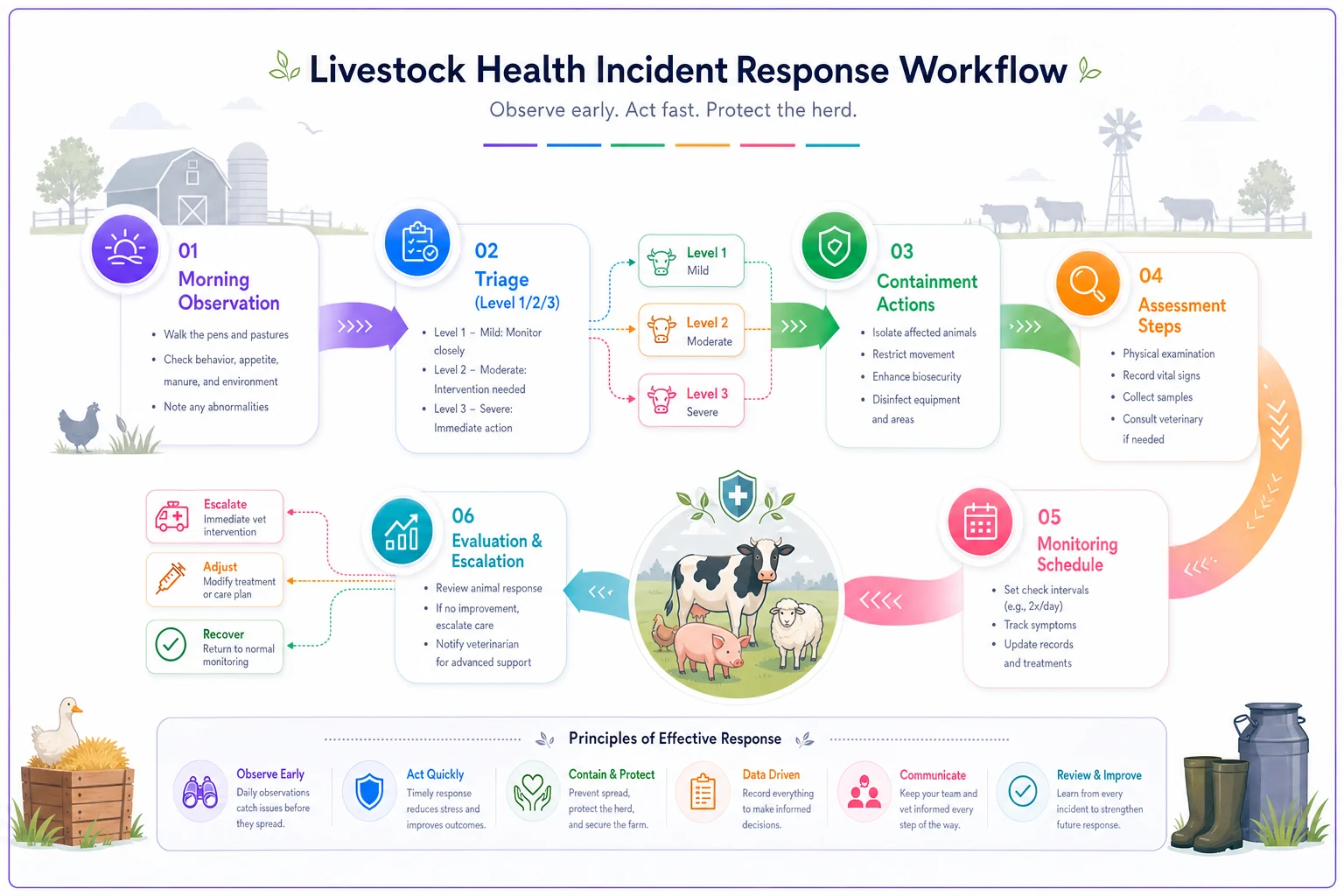
Have these templates and triggers available where people work so decisions aren't made from memory under stress.
Templates and Documentation Systems
The difference between operations with good health records and those without isn't dedication—it's templates that make documentation faster than not documenting. Complex forms guarantee failure. Simple templates work.
Daily Observation Log
| Date | Observer | Pen/Pasture | Animal ID | Symptoms | Action Taken | Follow-up Needed |
|---|---|---|---|---|---|---|
| (Simple grid format that takes 30 seconds per entry) |
Treatment Record
-
Animal ID/Description
-
Date and time
-
Symptom/Diagnosis
-
Medication (name, dose, route)
-
Withdrawal period end date
-
Administered by
-
Response to treatment (24hr/48hr)
Incident Report
-
Date first observed
-
Number affected
-
Symptoms
-
Contributing factors
-
Actions taken
-
Outcomes
-
Lessons learned
-
Protocol adjustments needed
Prevention Schedule Tracker
-
Task description
-
Target date/trigger
-
Actual completion date
-
Animals included
-
Products used (lot numbers)
-
Next scheduled date
-
Notes/observations
These templates must be accessible where work happens. Laminated sheets in the barn beat complex software requiring office returns. Simple spreadsheets on tablets beat paper forms that never make it to permanent records.
Laminate core templates and keep them in the barn for quick access so entries actually get made.
Core templates should be simple enough that staff choose the template over skipping documentation.
Coordination Between Health and Other Operations
Integrated herd health management fails when it operates isolated from other farm systems. Health protocols must mesh with feeding schedules, breeding programs, pasture rotations, and marketing plans—or they'll constantly conflict and get abandoned.
Common coordination failures:
Nutrition and health disconnect: Feeding programs change to cut costs without considering immune system impacts. Six weeks later, you're spending more on treatments than you saved on feed.
Breeding and health conflicts: Bulls go straight from purchase to breeding without quarantine. Vaccination schedules don't align with pregnancy status. Calving areas aren't managed for disease prevention.
Movement and treatment gaps: Animals get moved during treatment, making withdrawal tracking impossible. Sick animals get mixed into new groups before recovery.
The solution requires regular communication loops. Weekly 15-minute coordination meetings prevent more problems than monthly crisis meetings. Simple questions like "What's moving this week?" catch coordination gaps before they become health incidents.
Building Your Integrated System
Operations that successfully implement integrated herd health management follow a staged approach:
Stage 1 (Months 1-2): Basic structure
-
Define roles and responsibilities
-
Create simple observation protocols
-
Implement basic record keeping
-
Establish isolation areas
Stage 2 (Months 3-4): Prevention foundation
-
Develop vaccination schedules tied to operations
-
Set up parasite monitoring
-
Create nutrition/mineral protocols
-
Build treatment protocols for common issues
Stage 3 (Months 5-6): Response systems
-
Document incident response workflows
-
Create escalation triggers
-
Establish veterinary consultation protocols
-
Train backup personnel
Stage 4 (Ongoing): Optimization
-
Analyze patterns in health records
-
Adjust protocols based on outcomes
-
Integrate new tools and technologies
-
Expand to predictive management
Operations that struggle try implementing everything at once. Those that succeed pick one area, get it working smoothly, then expand. Usually starting with observation protocols and basic record keeping creates the foundation everything else builds on.
Technology and Automation Opportunities
While clipboards work, modern operations increasingly benefit from technology that connects different parts of health management. The game-changer isn't any single tool—it's integration so information flows automatically where needed.
AI-powered operational software transforms how health data moves through operations. Instead of manually transferring observations from field notebooks to spreadsheets to treatment records, integrated platforms capture information once and propagate it everywhere relevant. The morning observer notes a limping cow on their phone—it automatically appears on the treatment coordinator's action list, schedules tomorrow's recheck, and updates that animal's health history.
These platforms excel at pattern recognition humans miss. They notice respiratory issues spike 10 days after certain feed deliveries, or animals from specific pastures show higher parasite loads. They automatically calculate withdrawal periods, send vaccine alerts, and flag when treatment protocols aren't working.
The automation shines in preventing human error. The system won't let you ship animals under withdrawal. It reminds about revaccinations before immunity gaps develop. It tracks treatment costs by animal, condition, protocol—data that helps optimize both animal health and profitability.
Technology supplements good systems, doesn't replace them. Operations trying to solve broken workflows with software just digitize chaos. Get basic protocols and responsibilities clear first, then use technology to scale and refine them.
Measuring System Effectiveness
You know your integrated herd health management system works when problems get smaller, not bigger. Instead of discovering disasters, you catch issues early. Instead of crisis treatments, you prevent problems.
Key indicators your system works:
-
Treatment costs per head decrease over time
-
Mortality and morbidity rates drop below industry averages
-
Early detection rates increase (catching issues in first 24-48 hours)
-
Compliance rates improve for prevention protocols
-
Time spent on health management becomes predictable, not reactive
Most operations see meaningful improvements within 3-4 months. Not perfection—there will always be health challenges. But the shift from reactive crisis management to proactive health optimization changes both efficiency and profitability.
Track simple metrics monthly:
-
Number of treatments per 100 head
-
Average days from symptom to recovery
-
Percent of animals requiring retreatment
-
Prevention protocol completion rate
-
Hours spent on health-related tasks
When these numbers improve consistently, your system works. When they stagnate or worsen, review and adjust protocols.
Conclusion
The difference between operations that scale successfully and those hitting walls at 150-200 head comes down to systems, not skill. Integrated herd health management isn't about becoming a veterinary expert—it's building workflows that capture information, trigger appropriate responses, and prevent small issues from becoming large ones.
Ranchers who struggle try holding everything in their heads, assuming what worked at 50 head works at 500. Those who thrive recognize scaling requires structure: defined roles that overlap without gaps, observation systems that catch problems early, prevention schedules that actually happen, and response protocols that contain incidents before they cascade.
Start small. Pick one area—maybe daily observations or treatment recording—and build a simple, sustainable system. Get that working smoothly, then expand. Within six months, you can transform from reactive crisis management to proactive health optimization. Animals are healthier, operations run smoother, and you spend less time putting out fires and more time improving productivity.
The tools and templates exist. The question is whether you'll implement them before the next crisis forces your hand.
Ready to optimize your farm management?
Join hundreds of farmers using Barnyly to save time, improve animal health, and increase farm productivity.